Padel · Illustrated guide

How does a padel nonstop work?

One group, several rounds and more people to play with. Each format changes your partner, your opponents or the route to the final standings.

A nonstop is a padel session organised into rounds, with several players or pairs. The schedule, rotations and standings follow the organiser’s announced rules.

Choose a format ↓
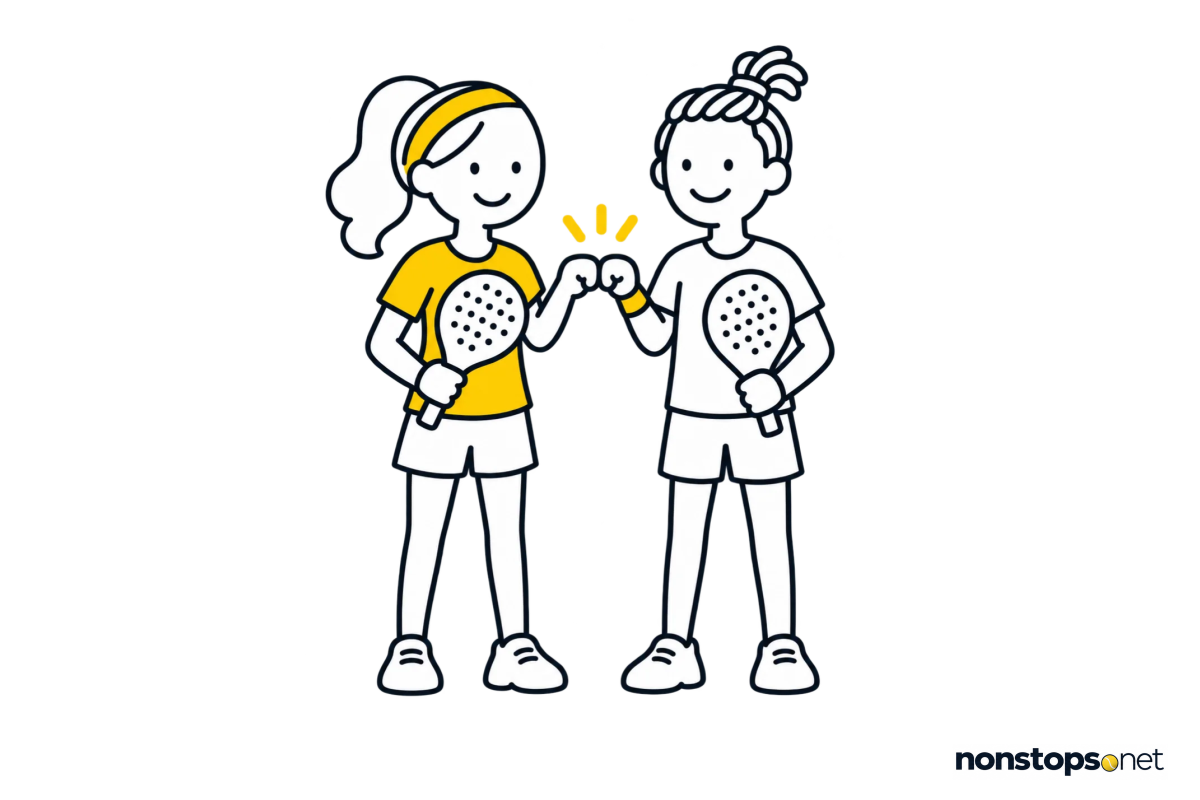
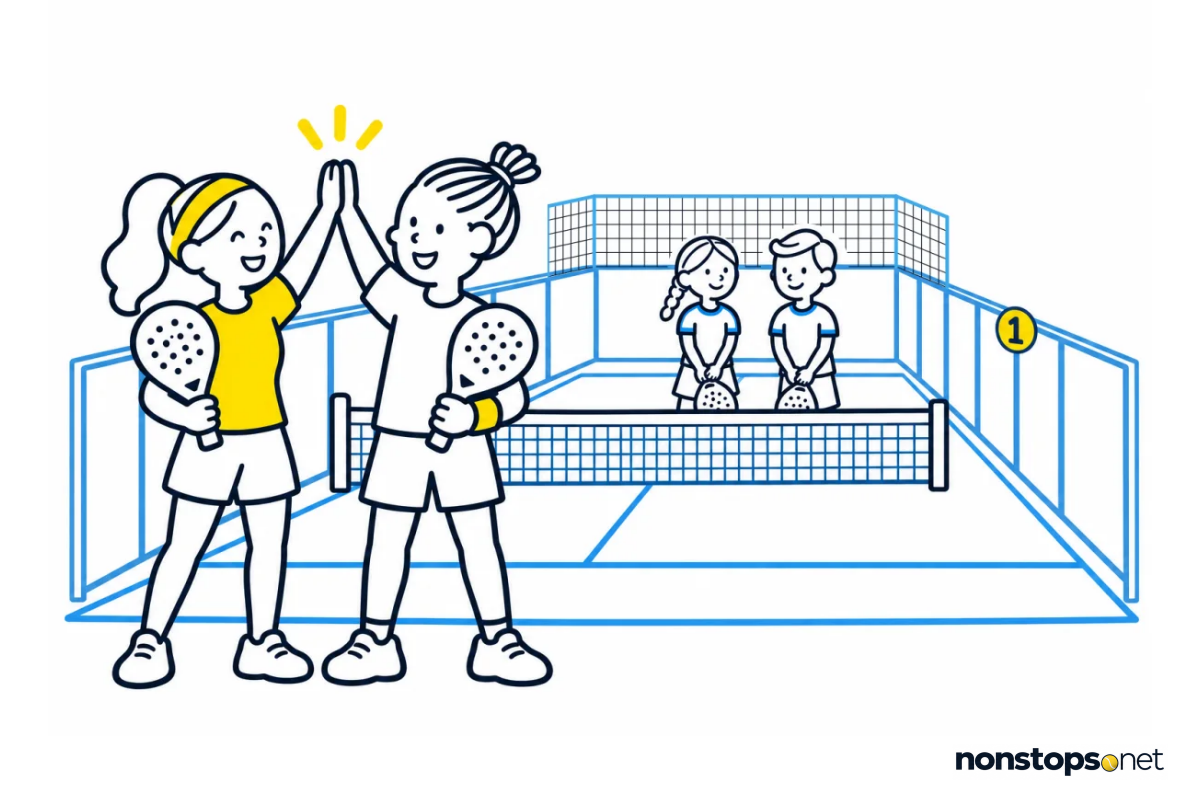
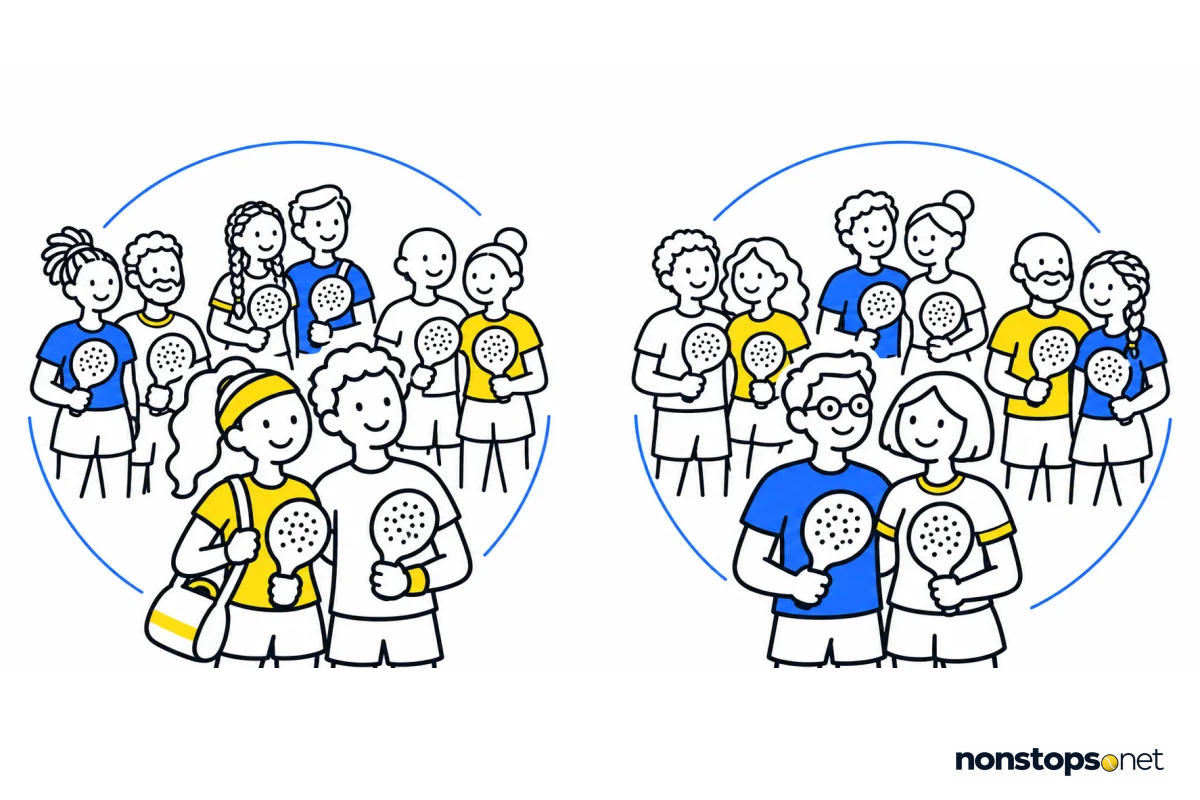
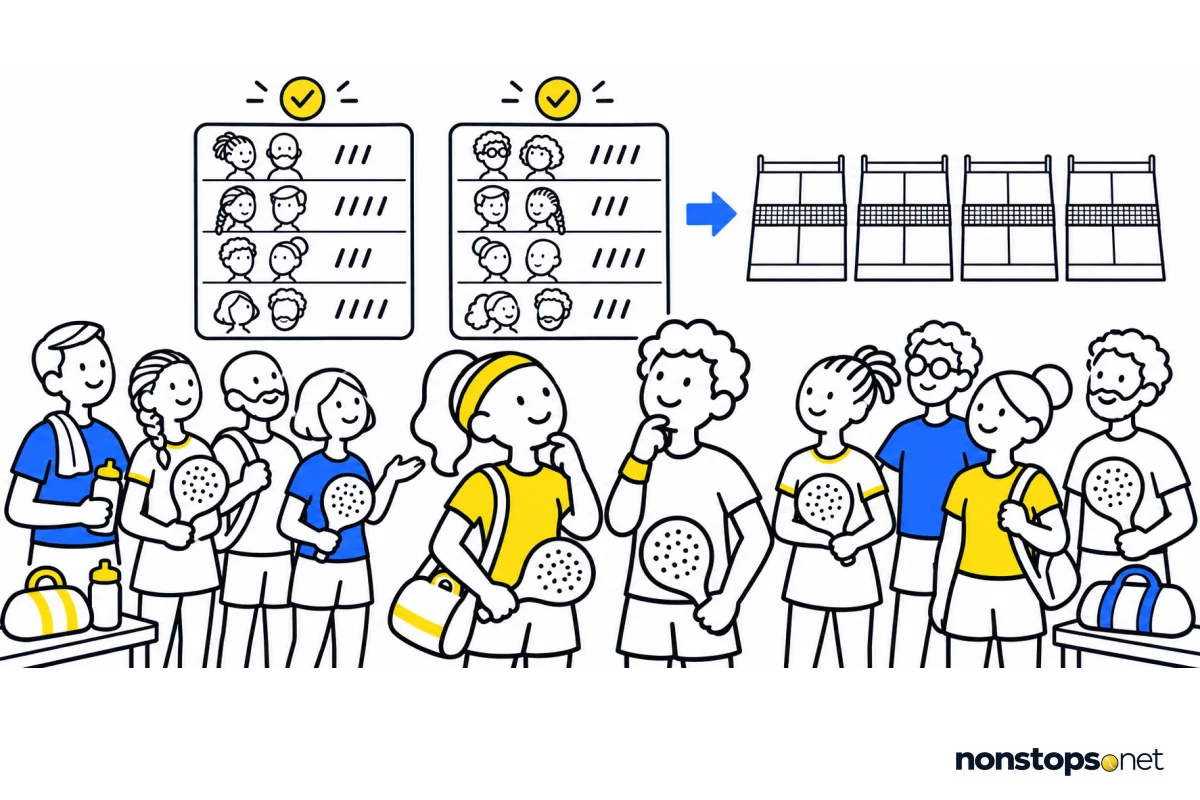
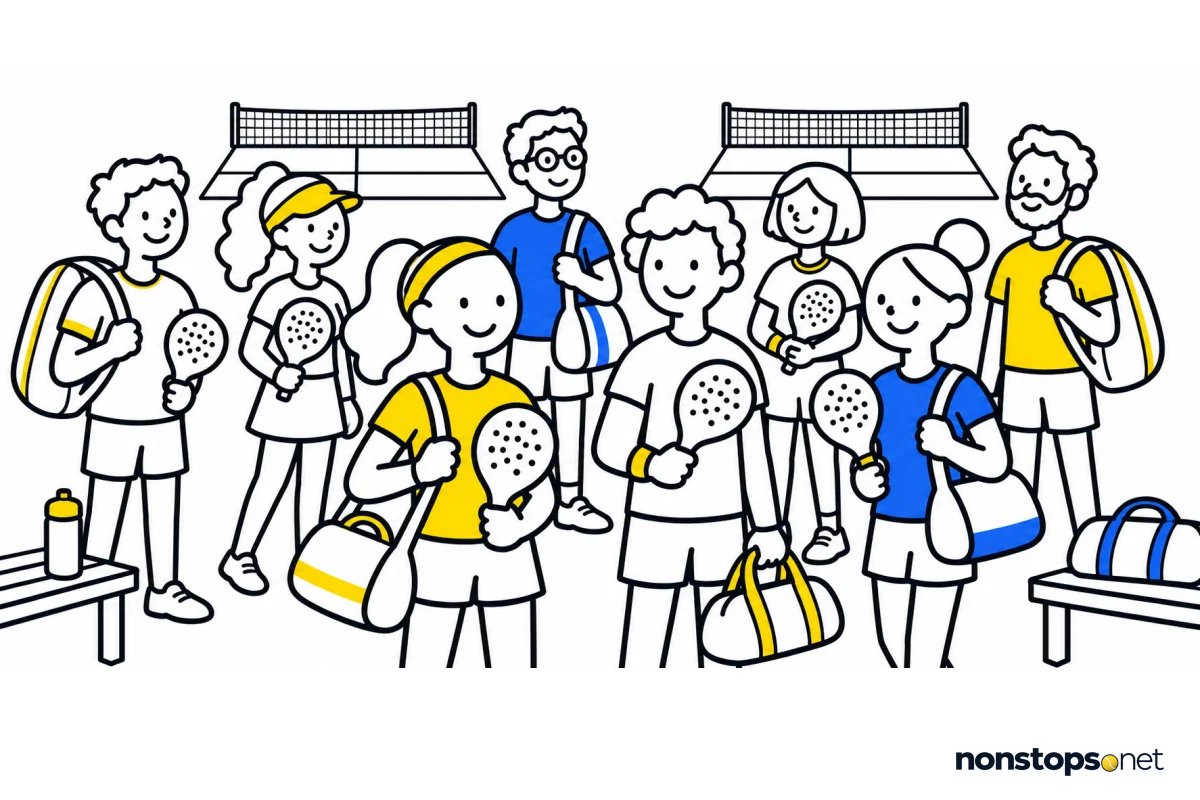
A group of padel players arriving together with their rackets
Illustrations feature fictional characters. Follow the same player or pair through each explanation.

Four ways to play

The name helps. The rules explain.

Before playing, check who rotates, what counts towards the standings and when the session ends.

01 · Your partner changes

Americano

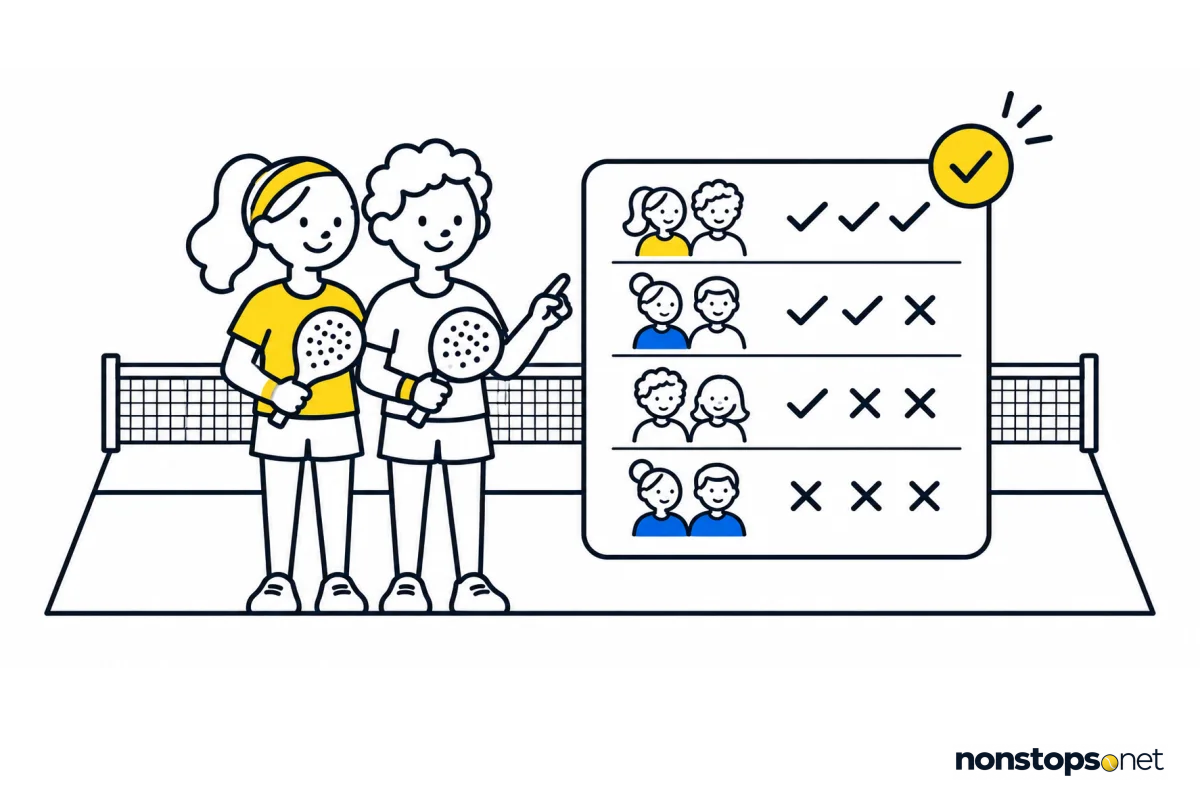
Change partners each round and keep your own results. A social way to play with different people.

How scoring works in this example

Most wins first. Each round’s result counts separately for both partners.

Change partners
Follow the player or pair in yellow.
See step by step4 illustrated steps
Ideal for 4 · 8 players (2–4 pairs)

Planning guidance: match the courts and session length to the group. This is not an app registration limit.

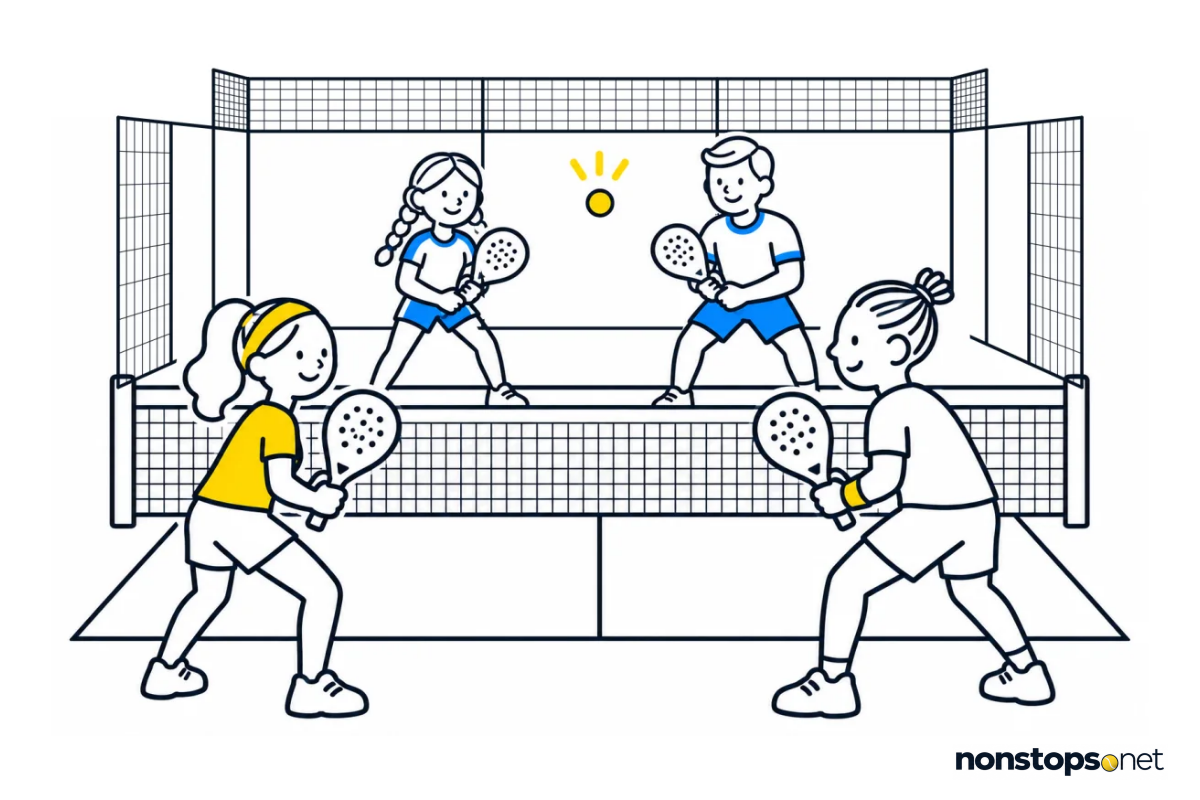
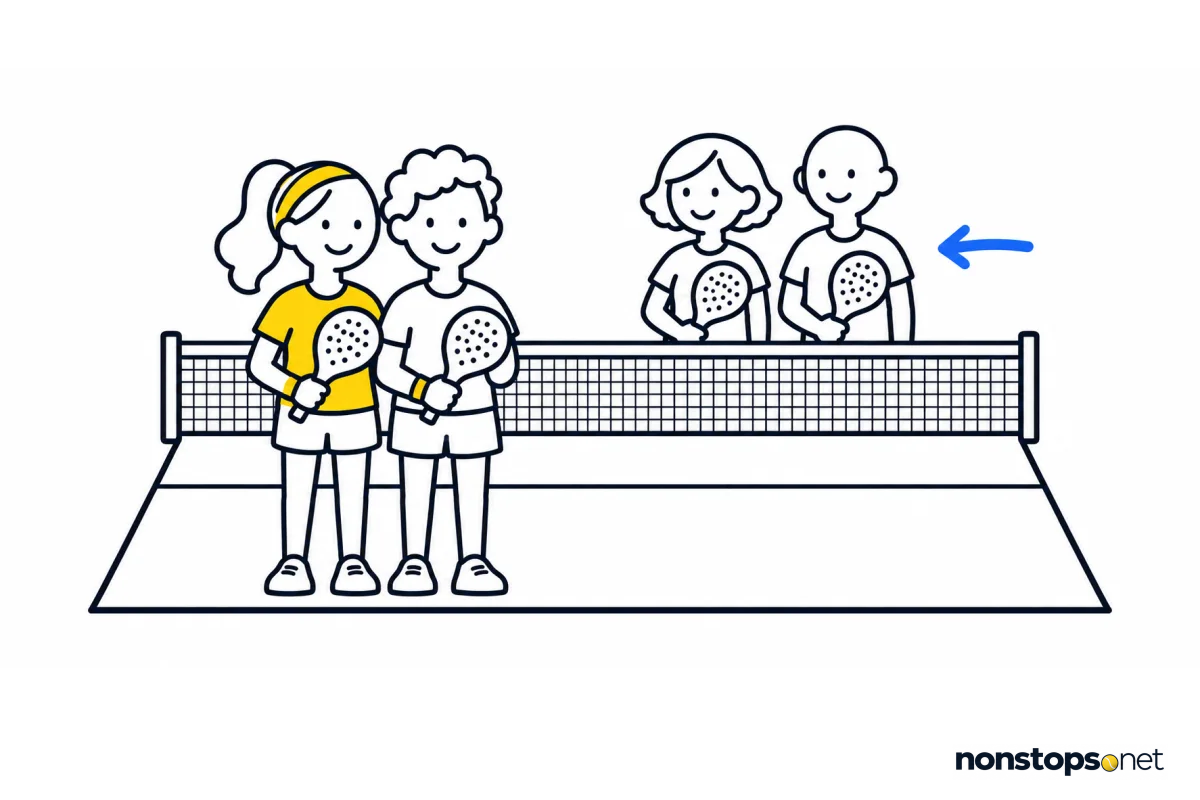
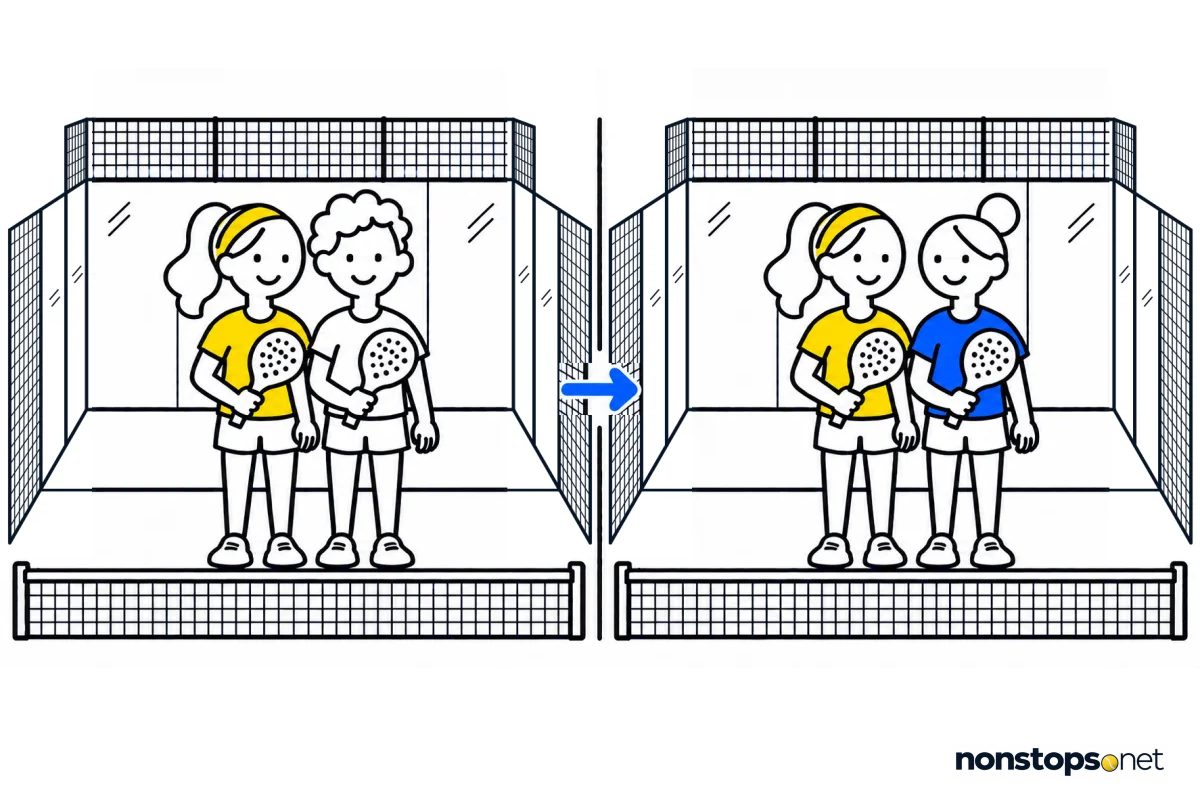
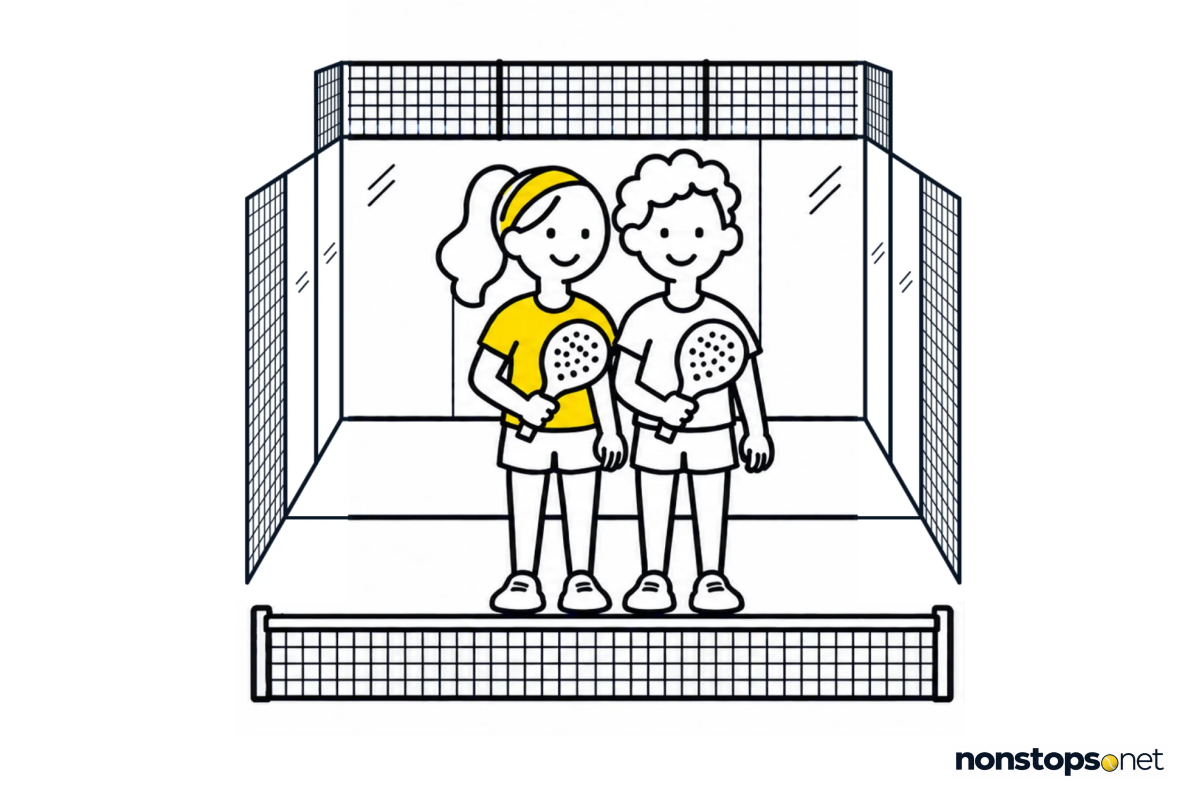
  1. Play the first round with a partner

    Step 1 of 4

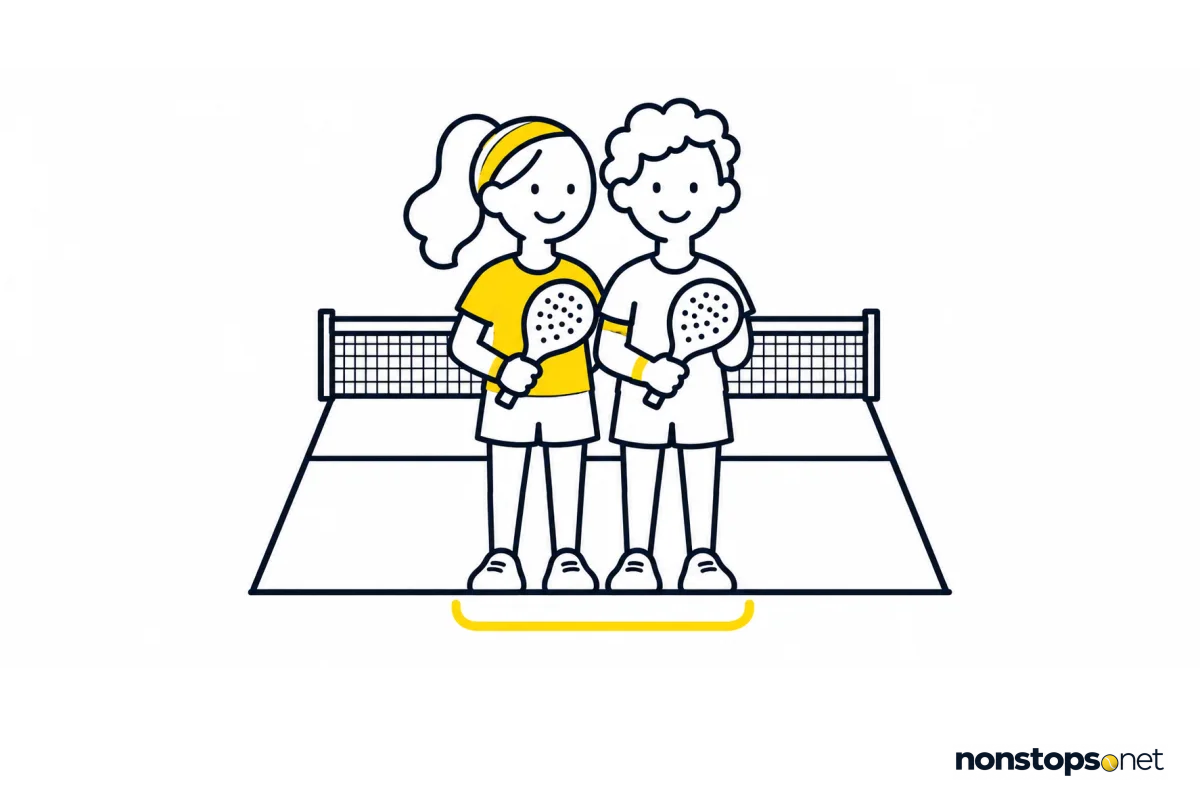
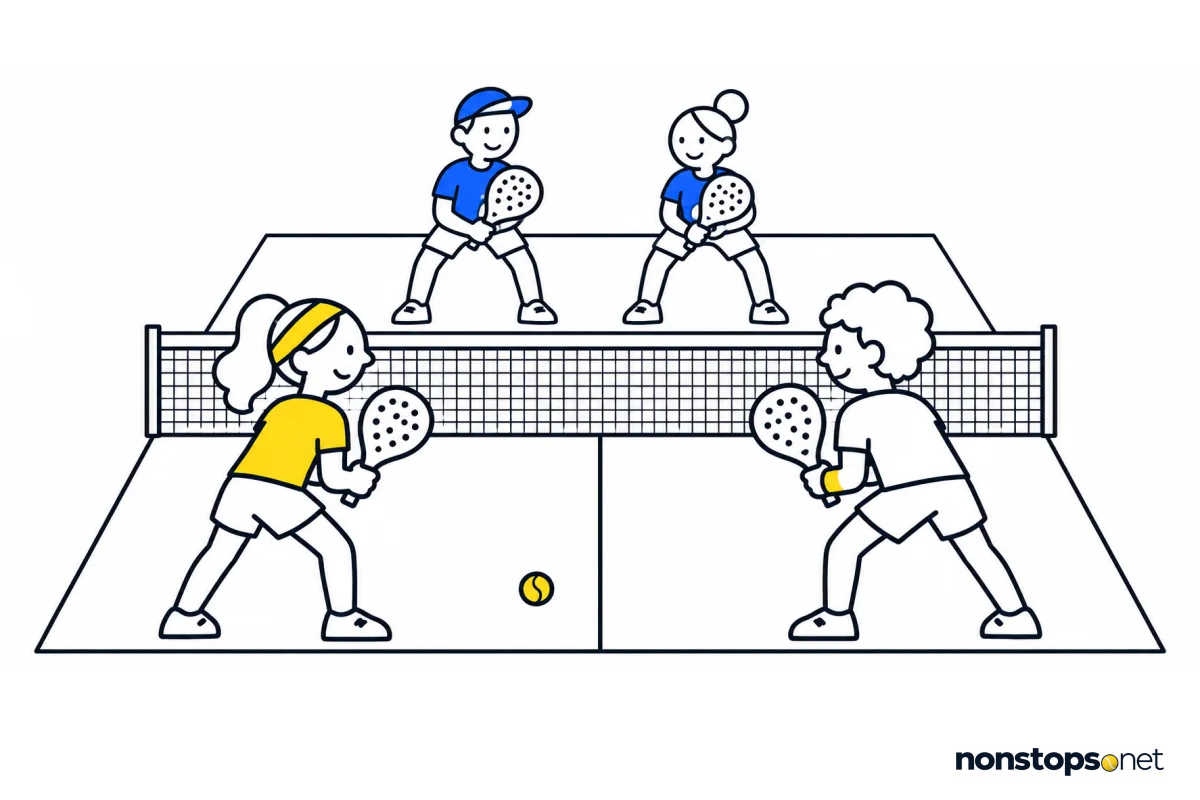
    Play the first round with a partner

    For example, Ana plays with João. They are on the same side of the net and share that round’s result.
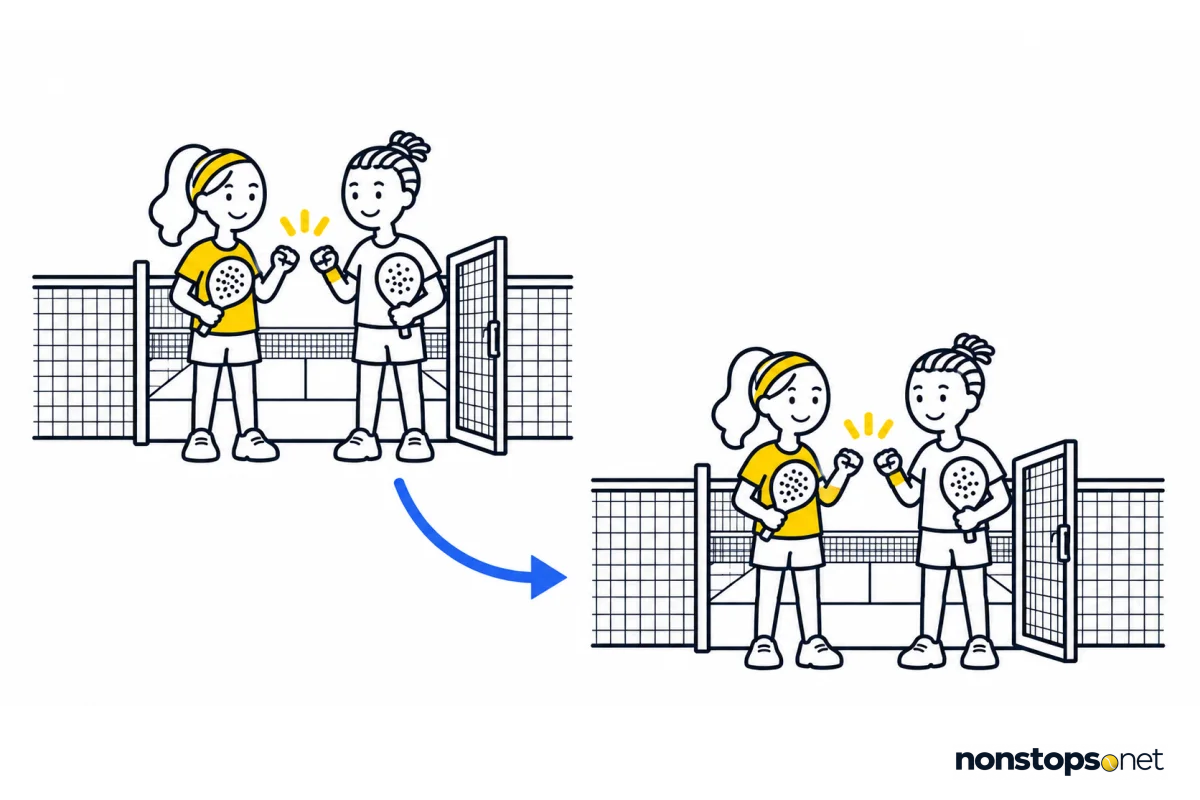
  2. Change partner in the next round

    Step 2 of 4

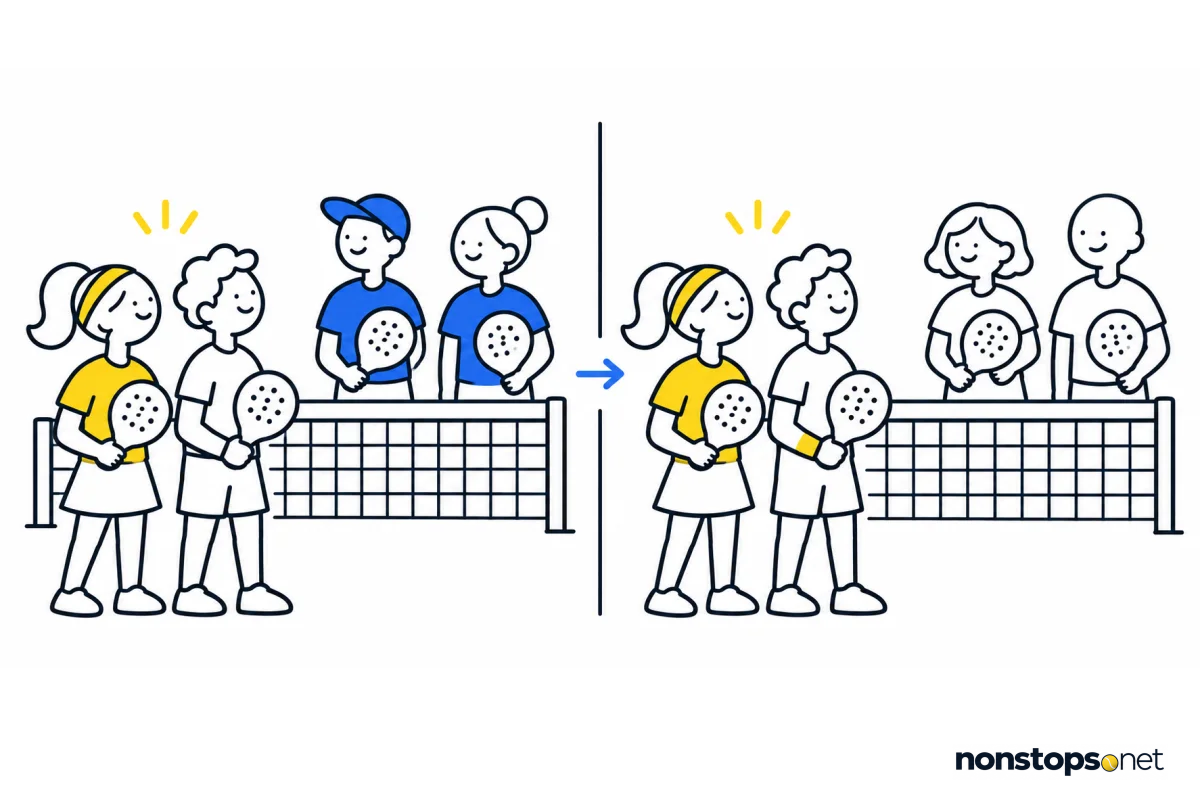
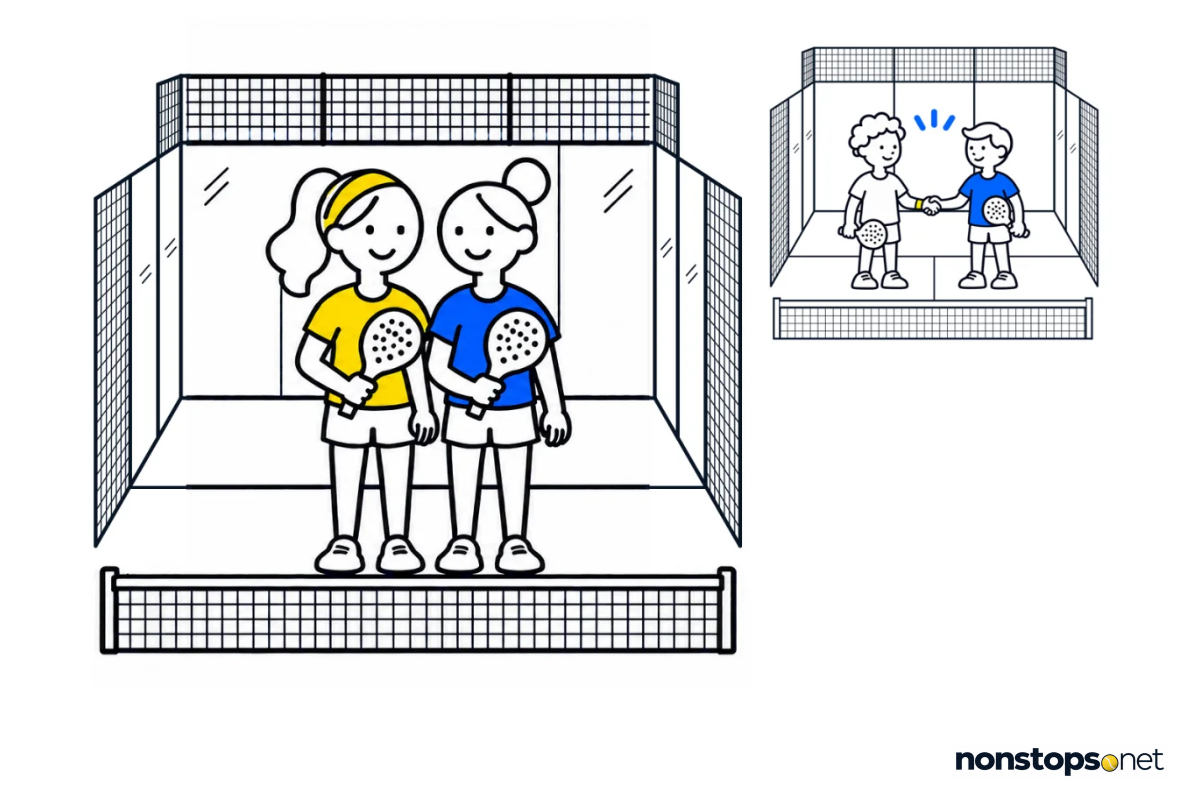
    Change partner in the next round

    Now Ana plays with Marta. The rotation plan lets players meet different partners before repeating a partnership.
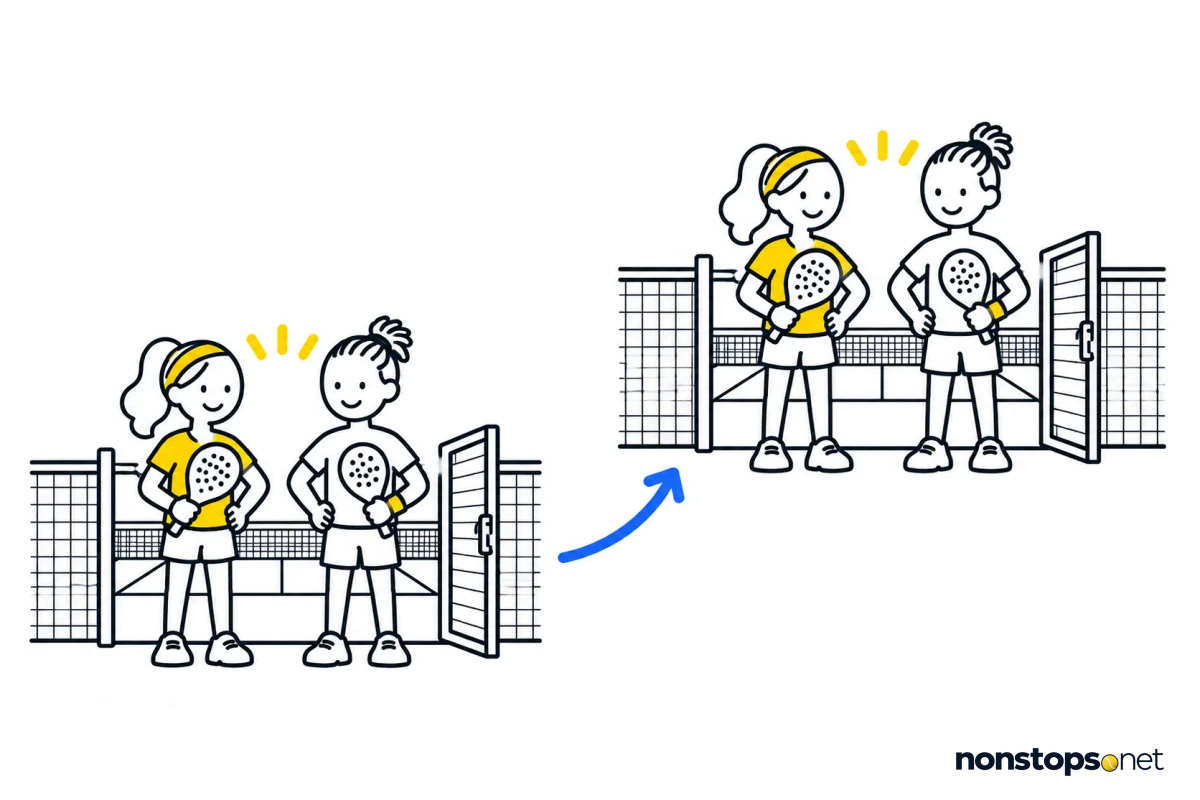
  3. Keep your own results

    Step 3 of 4

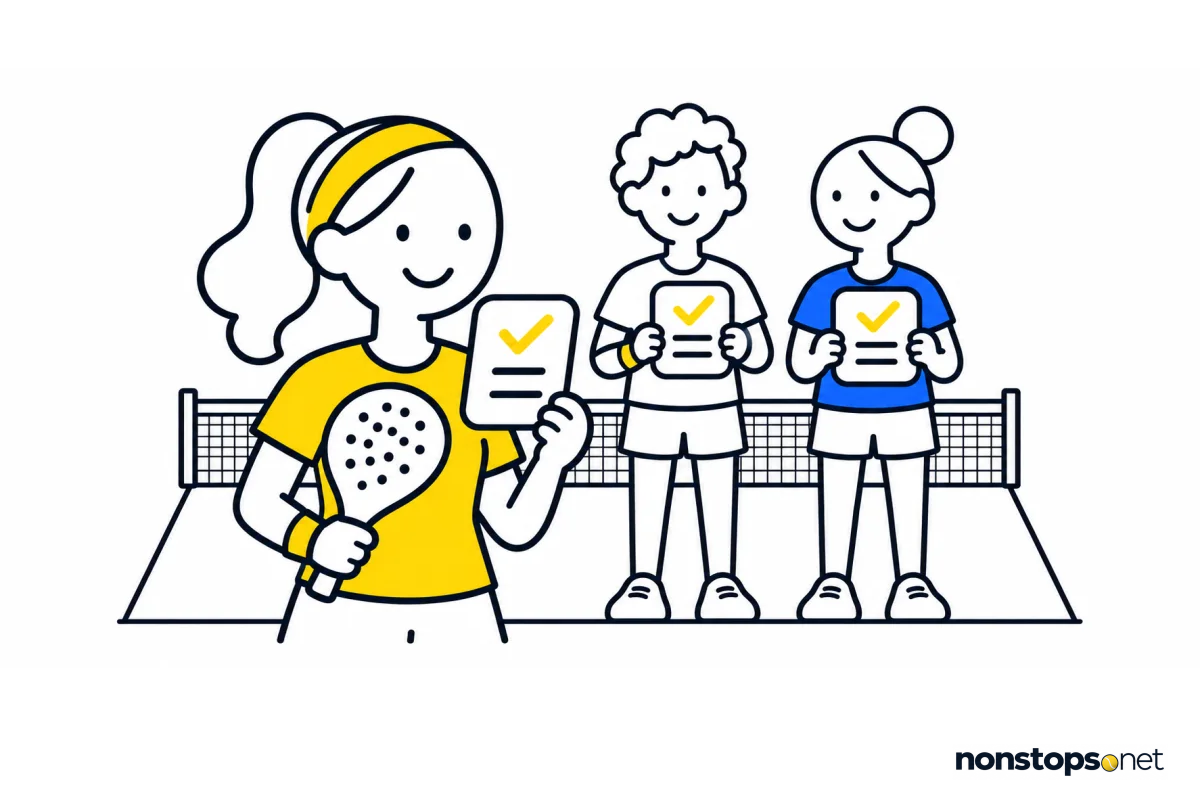
    Keep your own results

    If Ana and João win 6–4, each records 1 win and a +2 score difference. They may have different partners next round, but each player keeps their own results.
  4. Find the winner

    Step 4 of 4

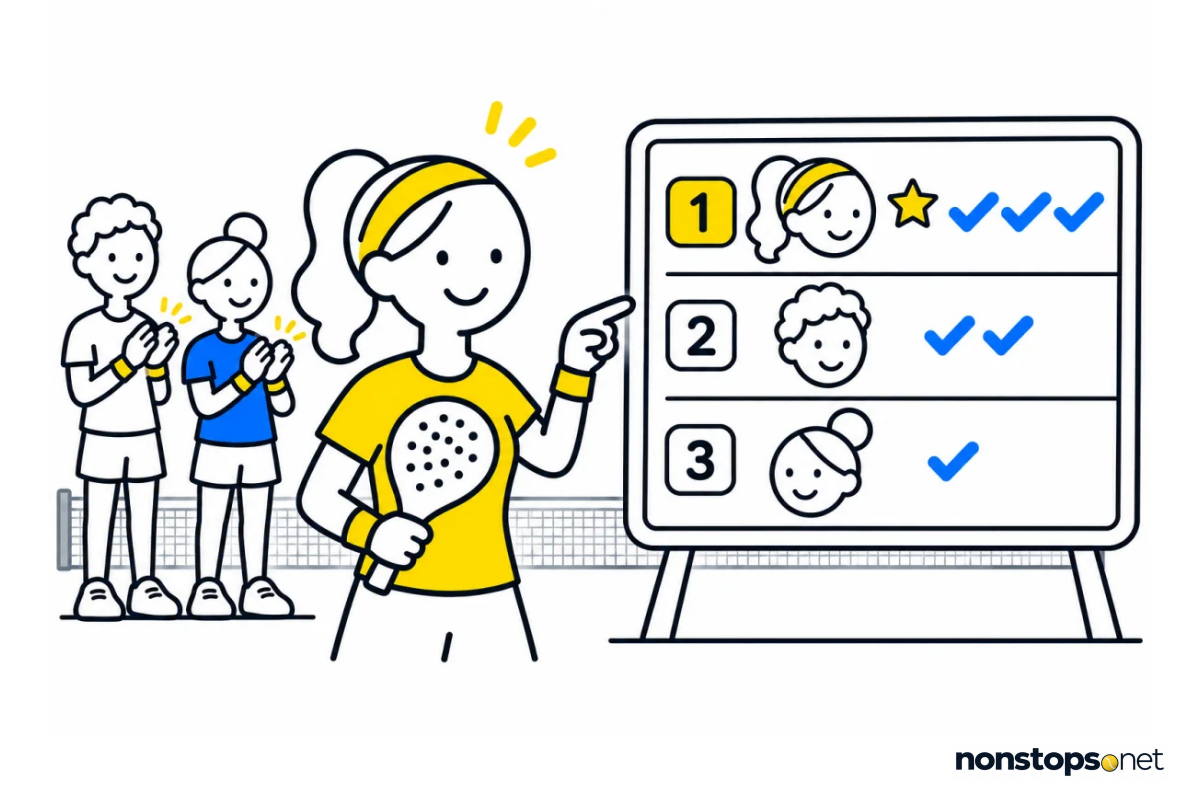
    Find the winner

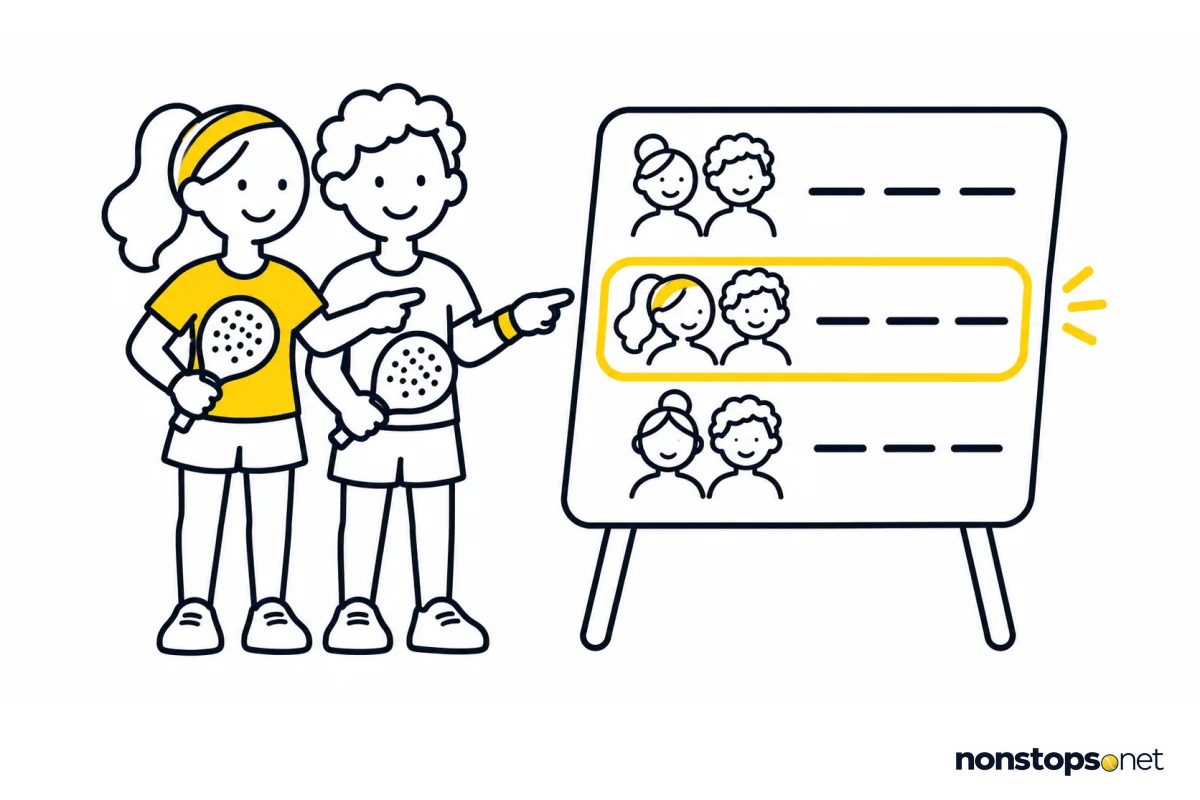
    After all rounds, compare the individual standings: most wins first, followed by the announced tie-break rules. In this example, Ana has the most wins and finishes first. You play in pairs, but the standings are individual.

Names you may hear

This guide uses the name Americano. You may also hear Mixada, Mix or Mixes at clubs; names alone do not guarantee the same rotation or scoring. In this example, partners rotate and standings are individual.

02 · Your court changes

Up and down · fixed pairs

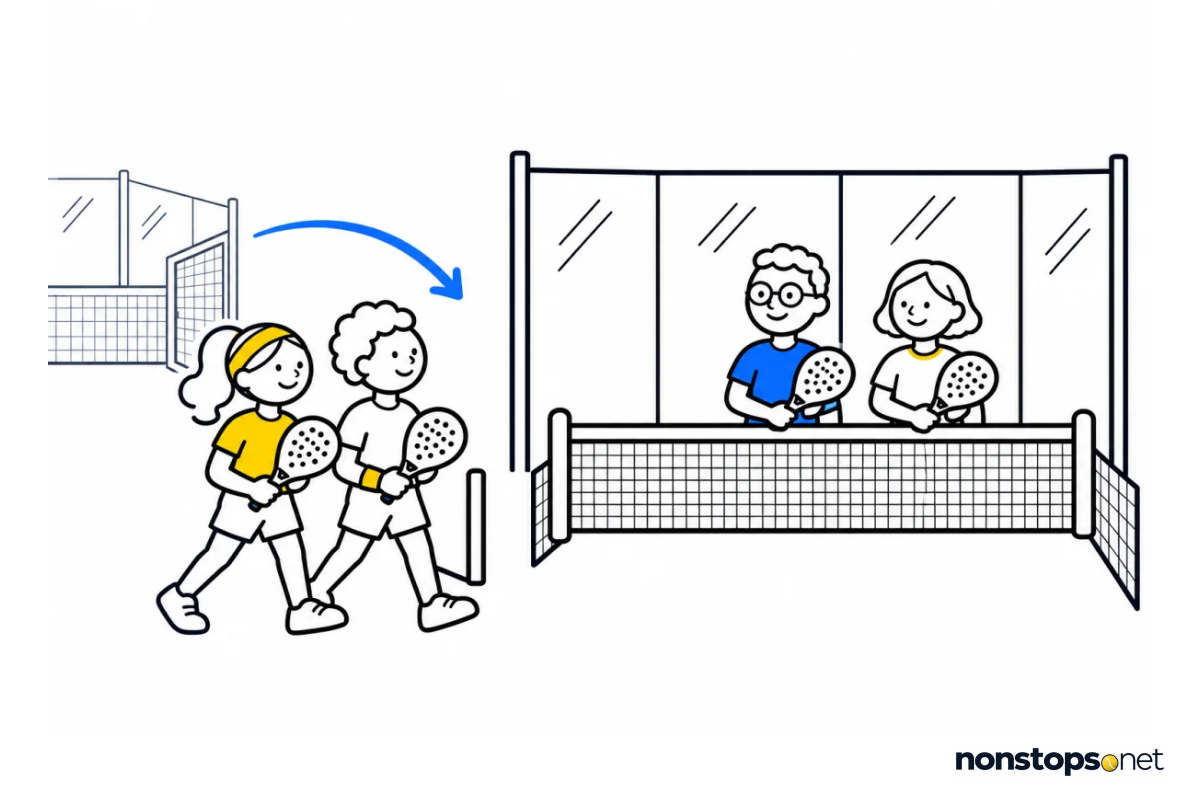
Keep your partner. Win and move up a court. Lose and move down.

How scoring works in this example

The pair that wins the last match on Court 1 wins Up and down.

Keep your pair · change courts
Follow the player or pair in yellow.
See step by step5 illustrated steps
Ideal for 8 · 16 players (4–8 pairs)

Planning guidance: match the courts and session length to the group. This is not an app registration limit.

  1. Stay with the same partner

    Step 1 of 5

    Stay with the same partner

    Ana and Rui play together throughout. They move courts as a pair, without changing partners.

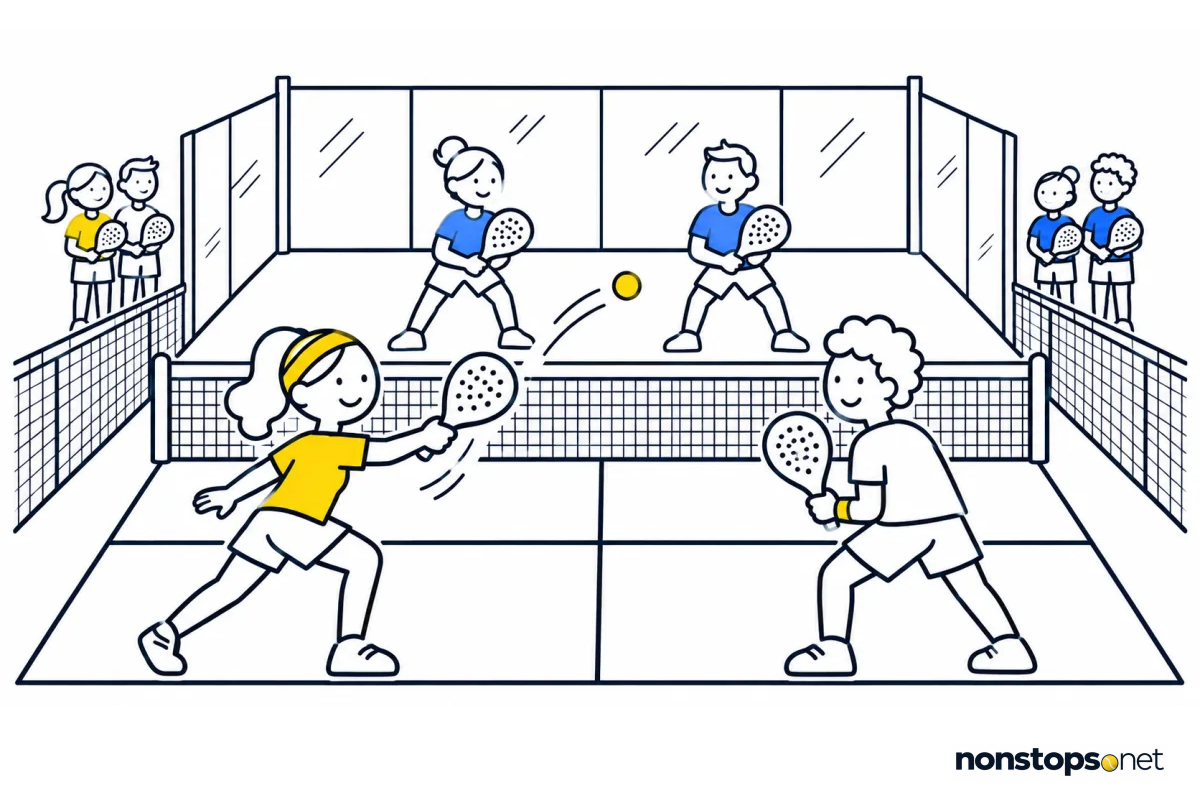
  2. Play the round

    Step 2 of 5

    Play the round

    Play another pair and record the result. That result determines the next court.

  3. If you lose, move down

    Step 3 of 5

    If you lose, move down

    The pair leaves Court 2 and moves together to Court 3. On the last court, there is no lower court to move to.

  4. If you win, move up

    Step 4 of 5

    If you win, move up

    The pair leaves Court 2 and moves together to Court 1. At the top, there is no higher court to move to.

  5. Win the last match on Court 1

    Step 5 of 5

    Win the last match on Court 1

    In the final round, the pair that wins the match on Court 1 wins Up and down. Ana and Rui win that match and are the winners.

Try moving courts

An example with four courts. The yellow pair starts on court 3. Moving “up” means closer to court 1, regardless of where it sits in the drawing.

The yellow pair is on court 3.

At court 1, there is no higher court; at the last court, there is no lower one.

An example with four courts. The yellow pair starts on court 3. Moving “up” means closer to court 1, regardless of where it sits in the drawing.Court 1Court 2Court 3Court 4Win → Court 2Lose → Court 4

Names you may hear

This is related to King of the Court. This version keeps pairs fixed; other events using that name may rotate partners or use different rules.

03 · Your opponents change

Round robin

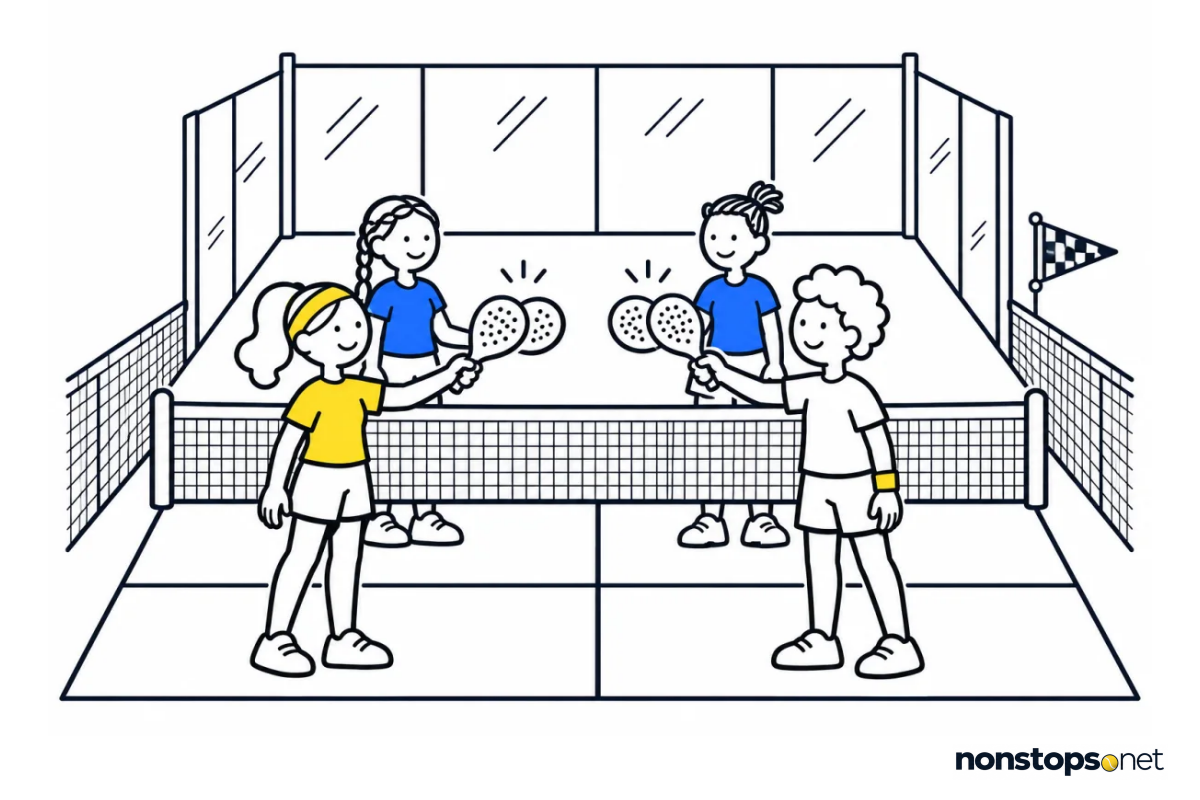
Keep your partner and play every other pair once.

How scoring works in this example

Each pair accumulates its results against every other pair. Most wins first, followed by the tie-break criteria.

Keep your pair · meet every opponent
Follow the player or pair in yellow.
See step by step4 illustrated steps
Ideal for 4 · 8 players (2–4 pairs)

Planning guidance: match the courts and session length to the group. This is not an app registration limit.

  1. Keep the same partner

    Step 1 of 4

    Keep the same partner

    Your pair stays together from start to finish.

  2. Meet your first opposing pair

    Step 2 of 4

    Meet your first opposing pair

    Play a round against the assigned opposing pair and record the result.

  3. Play every other pair

    Step 3 of 4

    Play every other pair

    Next round, your opponents change. Each pair plays every other pair once, keeping the same partner.

  4. Compare pair results

    Step 4 of 4

    Compare pair results

    Standings are by pair, with most wins first and tie-break criteria next.

Names you may hear

Round robin is called Todos contra todos in Portuguese. Here it is played with fixed pairs.

04 · The phase changes · The pair stays together

Group stage + final phase

Play in your group, then play for your final position. Your group result helps decide your final opponents; your partner stays the same.

How scoring works in this example

Your group position helps decide your final opponents. The last match settles your final place; the pair that wins the last match on Court 1 wins the event.

Play in groups · continue to the final phase
Follow the player or pair in yellow.
See step by step6 illustrated steps
Ideal for 16 · 32 players (8–16 pairs)

Planning guidance: match the courts and session length to the group. This is not an app registration limit.

The organiser announces the final rounds before play. The last two pictures explain the alternatives: one deciding game, or play and move between games.

  1. Form the groups

    Step 1 of 6

    Form the groups

    Join a group with your partner. You stay together throughout the event.

  2. Play the other pairs in your group

    Step 2 of 6

    Play the other pairs in your group

    Play every other pair in your group. The other groups play their own matches at the same time.

  3. See where you finished

    Step 3 of 6

    See where you finished

    When the group matches finish, each group has its own standings. Your group position comes first when arranging the final phase.

  4. Meet your final-phase opponents

    Step 4 of 6

    Meet your final-phase opponents

    Pairs with similar group finishes meet in the final phase. The best-placed pairs play for the top places; the others play for their own final positions.

  5. One final round? One deciding game

    Step 5 of 6

    One final round

    One final round? One deciding game

    If the final phase has one round, play one match to decide your final position. The pair that wins on Court 1 wins the event.

  6. More than one round? Play and move

    Step 6 of 6

    More than one final round

    More than one round? Play and move

    Play, then move up if you win or down if you lose, within the same placement group—like Sobe e desce. Keep your partner and play your next match. The last match decides your final position.

Names you may hear

Group stage + final phase starts with group matches and finishes with matches for the final places. With more than one final round, movement resembles Sobe e desce, within the same placement group.

Before stepping onto court

The questions that clear things up.

Do I always play with the same person?

It depends on the format. Partners rotate in the Americano example. In this guide’s up-and-down, round-robin and group-stage examples, pairs stay together.

How do we record a result?

Confirm whether rounds end after an agreed time or score, whether scores count games or points, and how draws are handled. Check the tie-break criteria before play.

Is a mix always an Americano?

There is no universal equivalence. Mix and Mixes may describe social sessions with different rules. Americano belongs to the rotation family; check the actual partners, scoring and schedule.

Do I have to win to keep playing?

In the rotating-partner, up-and-down and round-robin examples, losing a round does not eliminate you. For groups and finals, check the qualification rules and each pair’s route.

From the guide to your group

Bring people together. Prepare your next game.

Try the nonstops.net beta with your friends. Check the available formats and settings when preparing an event.

Try the beta